Smol'Ninskoe

Sant Petersburg

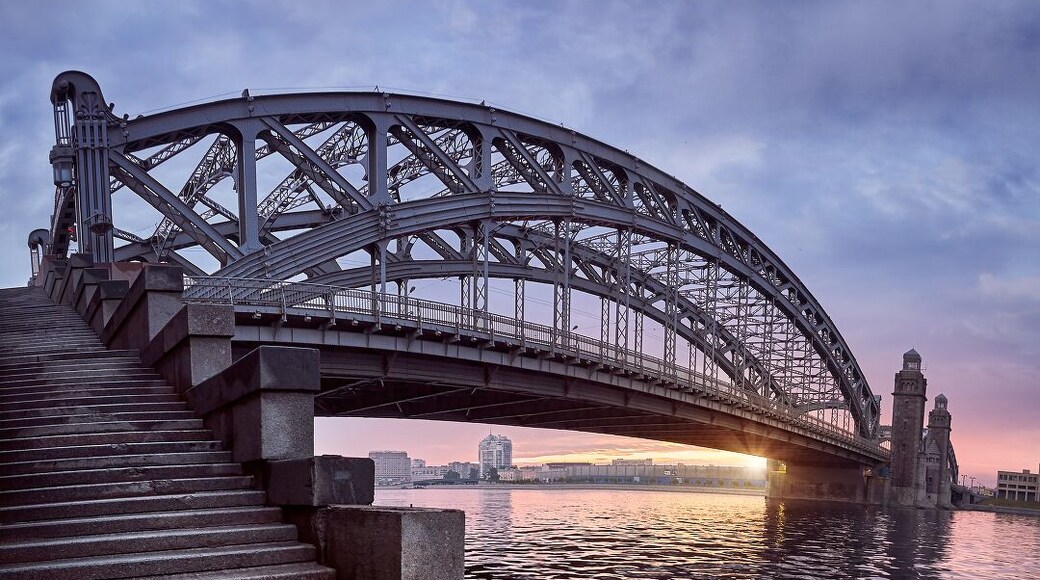
Peter the Great Bridge
When we visited Smolny Cathedral we witnessed a baby being baptized and that made this trip quite a special occasion!

Source: Wikipedia
This Russian Orthodox convent was built to house Elizabeth, the daughter of Peter the Great. After she was disallowed succession to the throne, she opted to become a nun. However her Imperial predecessor, Ivan VI was overthrown during a coup d'état (carried out by the royal guards in 1741). Elizabeth then decided against entering monastic life and accepted the offer of the Russian throne and work on the convent continued with her royal patronage. 


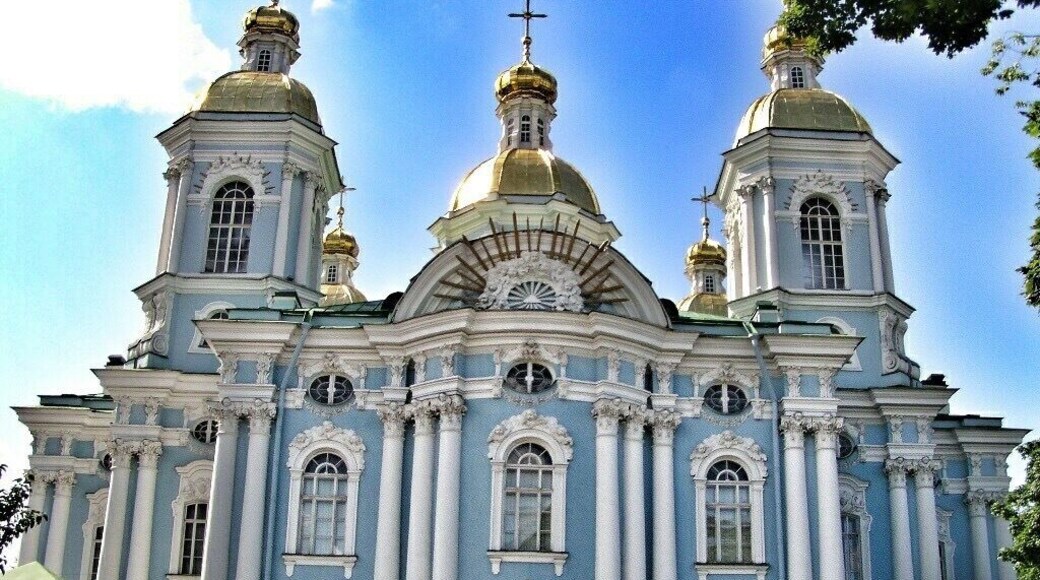
Smolny Cathedral (Sobor).
The convent's main church (catholicon or sobor), a blue-and-white building, is considered to be one of the architectural masterpieces of the Italian architect Francesco Bartolomeo Rastrelli, who also redesigned the Winter Palace, and created the Grand Catherine Palace (Yekaterininsky) in Tsarskoye Selo (Pushkin), the Grand Palace in Peterhof and many other major St. Petersburg landmarks. 

The Cathedral is the centerpiece of the convent, built by Rastrelli between 1748 and 1764. The projected bell-tower was to become the tallest building in St. Petersburg and, at the time, all of Russia. Elizabeth's death in 1762 prevented Rastrelli from completing this grand design.


The smaller bell tower.
When Catherine II assumed the throne, it was found that the new Empress strongly disapproved of the baroque style, and funding that had supported the construction of the convent rapidly ran out. Rastrelli was unable to build the huge bell-tower he had planned and unable to finish the interior of the cathedral. The building was only finished in 1835 by Vasily Stasov with the addition of a neo-classical interior to suit the changed architectural tastes at the time. The Cathedral was consecrated on 22 July 1835; its main altar was dedicated to the Resurrection and the two side altars were dedicated to St. Mary Magdalene and Righteous Elizabeth. The church was closed by the Soviet authorities in 1923. It was looted and allowed to decay until 1982, when it became a Concert Hall.

Today, Smolny Cathedral is used primarily as a concert hall and the surrounding convent buildings house various offices and government institutions. In addition, the faculties of sociology, political science and international relations of the Saint Petersburg State University are located in some of the buildings surrounding the cathedral.

The nearby Smolny Institute is named after the convent.

The name "Smolny" derives from the location, in the early days of St. Petersburg the place at the edge of the city where pitch ("smola" in Russian) was processed for use in shipbuilding and maintenance. As a result the locale was called "smolny" - the place of pitch.

#architecture
#blue
Source: http://www.saint-petersburg.com/monuments/catherine-the-great/
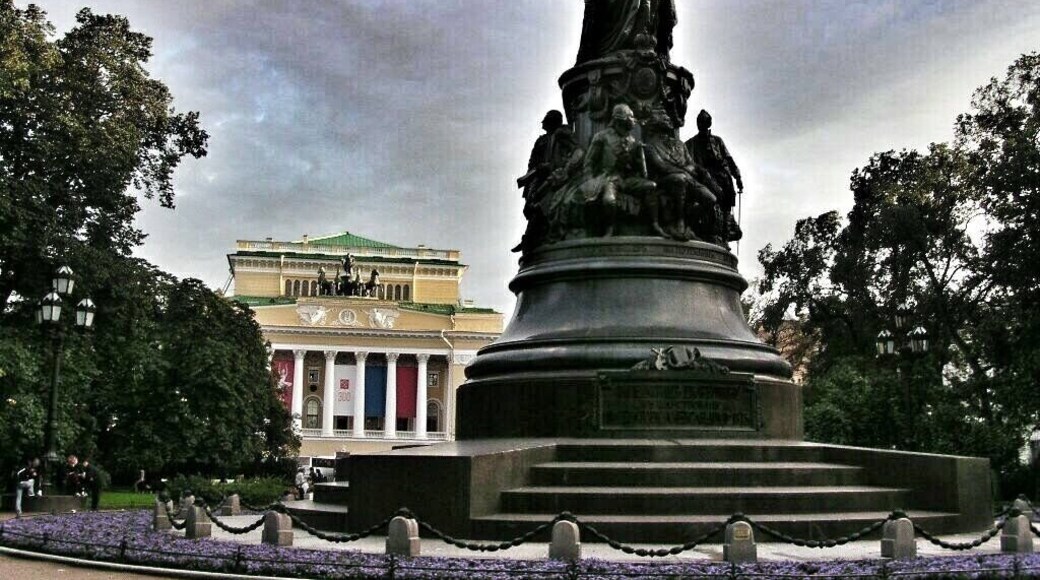
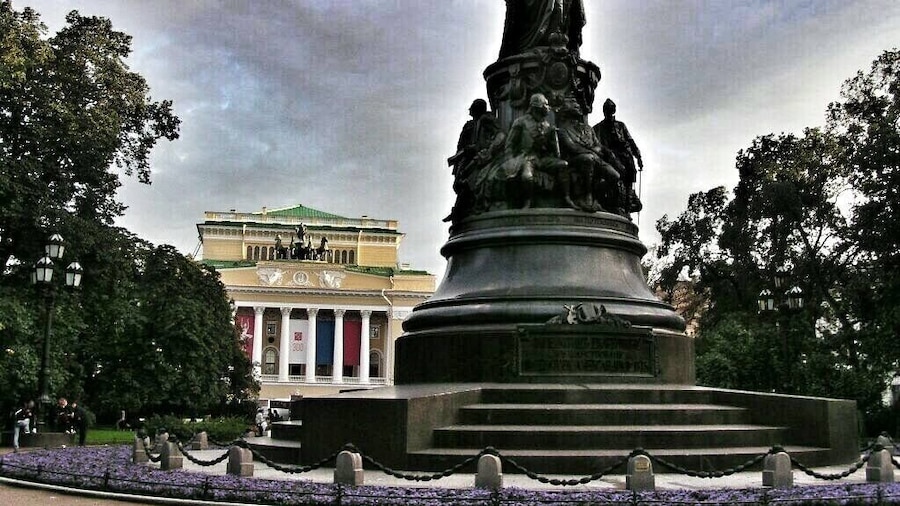
This monument to Catherine the Great was unveiled in 1873. The Empress was adored by the people of St. Petersburg for all her efforts to improve the life and education provided by the city and her reign has long seen been known as the "golden age" of Russia. The statue of Catherine is surrounded by delicately carved figures of the most prominent individuals of her reign: politicians and poets, military men and courtiers. The monument is located in the middle of a small, grass-covered square, just off Nevsky Prospekt, which is lined by the Anichkov Palace, the Alexandrinsky Drama Theater and the Russian National Library. As one of the country's most enlightened monarchs, Catherine could not have chosen a better spot herself.

The monument was designed by the Russian artist M.O. Mikeshin and created by the best sculptors and architects of the day. Catherine the Great is dressed in her official gown and holds a scepter in her right hand and an olive wreath in her left hand. The pedestal is decorated with the symbols of royal power. Among the dignitaries, who's likenesses have been carved on the statue's pedestal, are Alexander Suvorov, perhaps the most famous general in Russian history, Prince Potiomkin, the general and politician, Ekaterina Dashkova, the first woman to chair the Russian Academy of Sciences (in the 18th century!!!) and the celebrated poet Gavrila Derzhavin.

#architecture
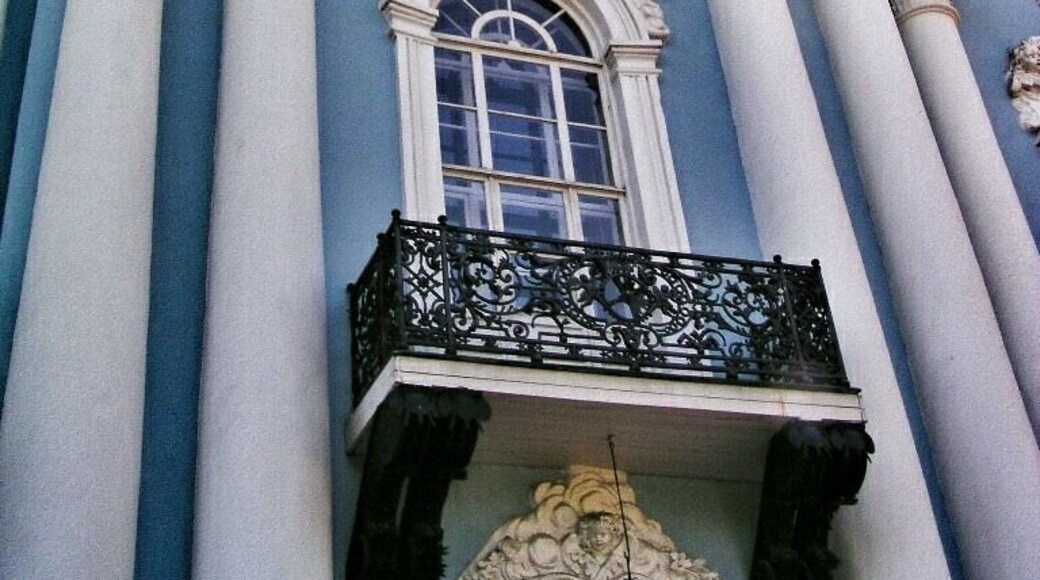
Before I visited Russia I somewhat envisioned it to be a rundown country but that false perception changed quite a bit after visiting St Petersburg which was our first stop after arrival in Russia. Everywhere seems to be well maintained (at least most of the tourist attractions were) with fresh coats of paint!

#architecture
#blue

Llocs populars per visitar


Altres zones com Smol'Ninskoe

Alexander Nevsky Lavra featuring a park and heritage architecture as well as a small group of people

Tsentralny

Visita llocs tan famosos a Tsentralny com Museu Anna Akhmàtova a la Casa de la Font i gaudeix d'aquest barri, que també ofereix museus fascinants. Per veure altres punts d'interès de la zona, pots agafar el metro a Estació de Mayakovskaya o Estació de Dostoyevskaya.

Tsentralny
Nevskiy Prospekt which includes night scenes and a city

Avinguda Nevsky

Entre els aspectes que més es destaquen a Avinguda Nevsky, un de rellevant és que ofereix museus, teatres i esglésies. Un cop allà, també pots visitar Museu Fabergé o Riba del riu Fontanka. Per desplaçar-te per la ciutat, pots agafar el metro a Estació de Mayakovskaya o Estació de Gostiny Dvor.

Avinguda Nevsky
Default Image

Okrug

Quan siguis a Okrug, aprofita per visitar atractius com ara Teatre Buff. Pots sortir a explorar la ciutat en metro des de, per exemple, Estació de Novocherkasskaya.

Okrug
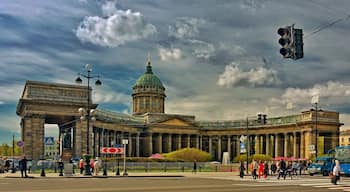
Kazan Cathedral which includes a church or cathedral and heritage architecture

Centre de Sant Petersburg

Centre de Sant Petersburg és un barri especialment famós perquè ofereix museus fascinants, cafès encantadors i esglésies. També et recomanem incloure visites a llocs com ara Teatre Alexandrinsky o Carrer de l'Arquitecte Rossi al teu itinerari. Per desplaçar-te per la zona, pots agafar el metro a Estació de Gostiny Dvor o Estació de Dostoyevskaya.

Centre de Sant Petersburg
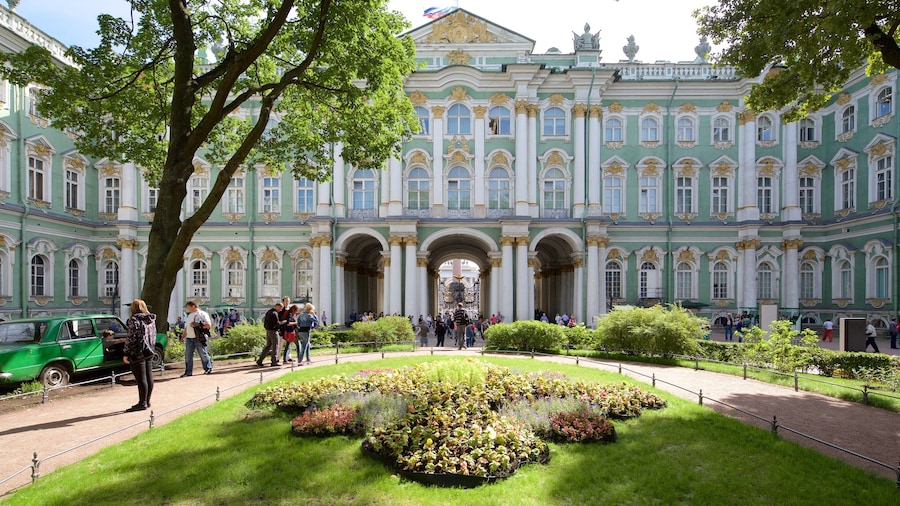
Hermitage in St Petersburg is a very nice museum. The rooms of the palace are so impressive ! #hermitage #saintpetersburg #russia #palace #museum

Vladimirskiy

Quan siguis a Vladimirskiy, aprofita per descobrir Museu Estatal Rus de l'Àrtic i l'Antàrtic o Avinguda Ligovsky. Per moure't per la ciutat, pots agafar el metro a Estació de Vladimirskaya o Estació de Dostoyevskaya.

Vladimirskiy
The former city square of the Old Russian Empire, this square its famous for holding the 1905 Bloody Sunday and the 1917 October Revolution.   A massive square just in front of the Hermitage Museum, its a popular destination where carriages, skaters and tourists mix up. 

The statue in the middle is the Alexander Column, a 50 meters tall column thats unique of its kind.   This enormous column was placed in the middle of Palace square to celebrate the victory of Russia over Napoleonic France.  Unlike its ancient predecessors, at the top of the column there was not a statue of the respective emperor at the time

Districte del Palau

Quan siguis a Districte del Palau, aprofita per visitar atractius com ara Museu-apartament de Puixkin. Pots sortir a explorar la ciutat en metro des de, per exemple, Estació de Nevsky Prospekt.

Districte del Palau


Smol'Ninskoe

Si vols estalviar en el teu viatge, tria com a mínim dos elements: