Itinerario del día
- Punto de partida: Sibiu
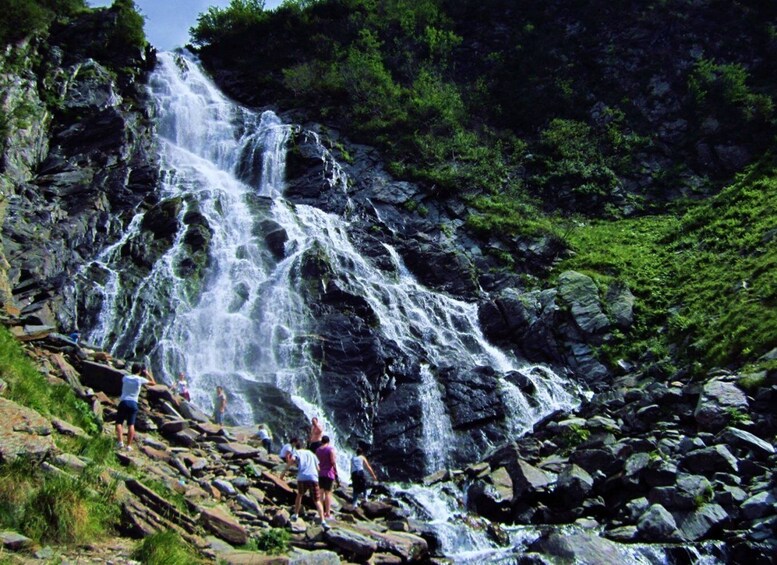
- 09:00 from your accommodation in Sibiu ,you will travel to the Făgăraș Mountains, passing through scenic landscapes as you head toward Bâlea Cascada.
Parada 1: Carretera Transfăgărășan
La carretera Transfăgărășan es uno de los trayectos más famosos y pintorescos del mundo, que serpentea por las montañas Făgăraș de Rumanía. Esta carretera de gran altitud (DN7C) conecta el sur de Transilvania con Valaquia, ofreciendo una serie de vistas impresionantes, monumentos históricos y emocionantes experiencias de conducción.
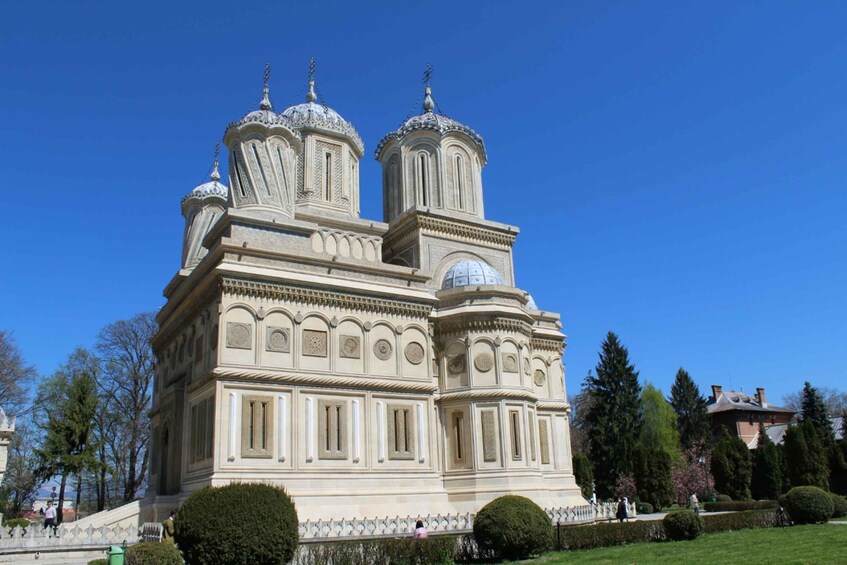
Stop 2: Curtea de Argeș
A historic town in Argeș County, Romania, located in the southern part of the country, nestled in the foothills of the Făgăraș Mountains. It is an important cultural, historical, and religious center, known for its rich heritage and stunning architecture
Stop 3: Cozia Monastery
Cozia Monastery is one of the oldest and most significant monasteries in Romania, located in the Vâlcea County, along the Olt River, in southern Romania. It is a major historical, cultural, and religious landmark in the country, known for its beauty, historical importance, and connection to the medieval Wallachian state
- Main Attraction
o Historical Significance: was founded in 1388 by Mircea the Elder (Mircea cel Bătrân), one of the most important rulers of Wallachia. The monastery played a key role in the religious and political life of the region, serving as a center of learning, culture, and power during the medieval period. It also served as a royal residence for the Basarab dynasty
o Architectural Style: The monastery is a prime example of Brâncovenesc architecture, a style that blends Byzantine influences with Romanian traditions. The Cozia Monastery Church features ornate frescoes, intricate stonework, and decorative elements that reflect both local and Byzantine influences
El Monasterio de Cozia no es sólo un monumento religioso, sino también un tesoro de la historia, la cultura y el arte rumanos. Su impresionante ubicación, su importancia histórica y su belleza arquitectónica lo convierten en uno de los monasterios más venerados de Rumania. Es una visita obligada para los interesados en el patrimonio y la espiritualidad rumanos
- Regreso a Sibiu
- From Cozia Monastery to Sibiu is approximately 100 kilometers (62 miles), and the journey takes around 1.5 to 2 hours by car, depending on traffic and road conditions. The road is well-maintained, and the drive is relatively straightforward, passing through small towns and picturesque landscapes, making it a pleasant journey.
Este recorrido de 12 horas combina la belleza natural de la Carretera Transfăgărășan, con visitas a lugares de interés histórico y espiritual, ofreciendo un viaje inolvidable por el patrimonio paisajístico y cultural de Valaquia.